
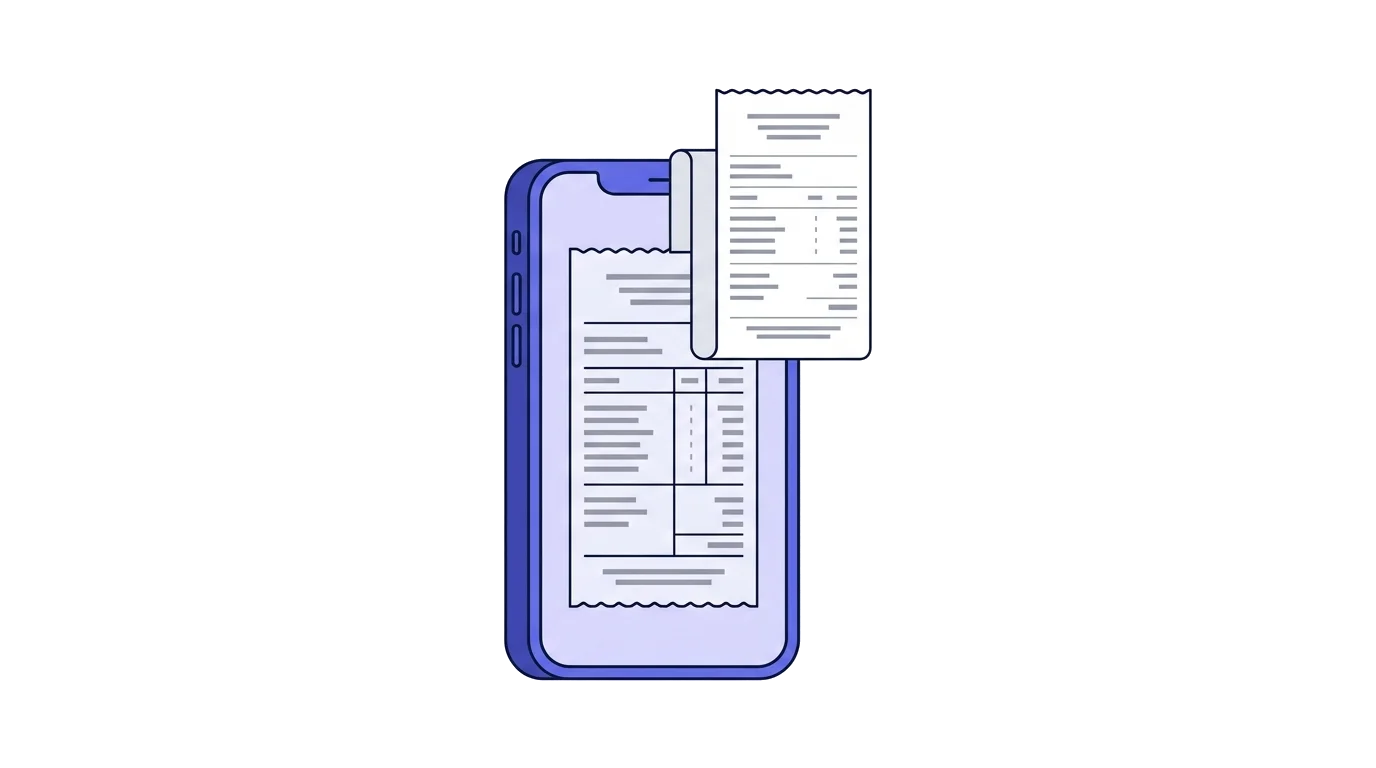
A receipt records one event: money coming in. That's what separates it from the invoice, which records the sale itself, and it's what dictates every field on it. A digital receipt is the same receipt, issued from software and emailed instead of torn out of a book.
When to issue one
Every time a payment is received, dated the day it actually arrived. Not the date of the sale, not the date of the invoice, and not the end of the month to tidy up the period.
That date isn't a formality. For most service providers in Israel the VAT charge arises when payment is received, so the day the money lands is what moves the invoice and the reporting with it. A receipt backdated or postdated moves the period the income belongs to.
When payment arrives at the moment of sale, it's common to issue one tax invoice receipt instead of two separate documents.
The payment method is the field that fails
A receipt without the payment method spelled out isn't a valid receipt, and it's the field that gets forgotten most.
- Cash: the amount alone
- Cheque: number, bank and branch, and the due date
- Card: card type and the last four digits
- Bank transfer: the sending bank and the date
- Payment app: the service name and the reference it returns
A card payment raises a question of its own, because what lands in the bank is smaller than what the customer was charged. That is covered in the card payments guide.
The reason is entirely practical: the receipt is what lets the books be reconciled against the bank statement. A line reading only "payment received" leaves that reconciliation to guesswork, and in an audit it looks like exactly what it is, an entry with nothing behind it.
The rest of the required fields
The heading "receipt". The business name and dealer number. The payer's details. A serial number from the receipt sequence, which is separate from the invoice sequence. The date payment was received. The amount received. And a reference to the document it was paid against, where there is one.
The full field list for every document type is in the document templates guide.
What makes it digital
A receipt issued from software is a computerized document, which brings requirements a paper book never had: a digital signature locked at the moment of issue, numbering held by the system rather than by hand, and seven-year retention in a state where it can be produced.
Emailing it adds two conditions people skip: notice to the assessing officer by registered mail before the first computerized document goes out, and the customer's consent, written or computerized, before they receive their first one from you. Both are covered in the "green invoice" guide.
One thing that slips through: the signature has to cover every document type. A system that signs tax invoices but renders receipts as ordinary PDFs leaves half the fiscal documents unprotected.
Partial payments and instalments
One invoice can be settled by several payments, and each payment gets its own receipt: dated when it arrived, for the amount that arrived, with its own payment instrument. All of them reference the same invoice, which is how you see how much of it is settled and how much is still open.
The opposite happens too: one payment closing several invoices. The receipt then lists which documents were closed and for how much each was closed.
Tax withheld at source
A customer who withholds tax at source transfers less money than they owe, and the difference still counts as paid. The receipt shows the gross amount, states the amount withheld, and shows the net actually received.
The withholding certificate the customer issues is kept separately. It's what offsets the tax bill in the annual return, and without it the money withheld simply isn't counted.
Corrections and cancellations
An issued receipt is never edited and never deleted. When something is wrong, you issue a document cancelling it and then a correct receipt.
Don't confuse the two mechanisms: a credit note cancels an invoice, meaning a sale. A payment that fell through, a bounced cheque or a reversed transfer is a different event, handled by cancelling the receipt itself.
Receipts on their own sequence, with partial payments
A receipt in Slate is issued with a built-in field set per payment method, signed at the moment of issue, and numbered from the receipt sequence, separately from invoices. A partial payment settles its share of the invoice and leaves the balance open, and when payment arrives with the sale you can issue a tax invoice receipt instead of two documents. You can issue for free, with no document limit and see how it looks.
This is general information, not tax advice. For a specific case, consult an accountant or tax adviser.
The sample receipt shows a real payment breakdown, with a card payment and a bank transfer on the same document.
Common questions
When is a receipt issued?
Every time money comes in, dated the day it actually arrived. The receipt records the payment, while the invoice records the sale.
What has to appear on a receipt?
The heading "receipt", the business name and dealer number, the payer's details, a serial number from the receipt sequence, the date payment was received, the amount received, and the payment instrument with its identifying details.
Is a digital receipt treated differently from a printed one?
Not in standing. A receipt issued from software is a computerized document, so it needs a digital signature and locked numbering, and emailing it depends on the recipient's consent and prior notice to the assessing officer.
What about a payment that arrives in instalments?
Each payment gets its own receipt, dated when it arrived and for the amount that arrived. All of them reference the same invoice.
How do I fix a receipt issued by mistake?
Not by editing and not by deleting. You issue a document cancelling the wrong receipt, then a correct one. A credit note cancels an invoice, not a receipt.
A customer withheld tax at source. What goes on the receipt?
The gross amount the payment is credited against, the amount withheld, and the net actually received. The customer's withholding certificate is kept separately and is what offsets the income tax bill at year end.
Does a receipt entitle the customer to deduct input VAT?
No. The deduction rests on the tax invoice. The receipt evidences payment only.