
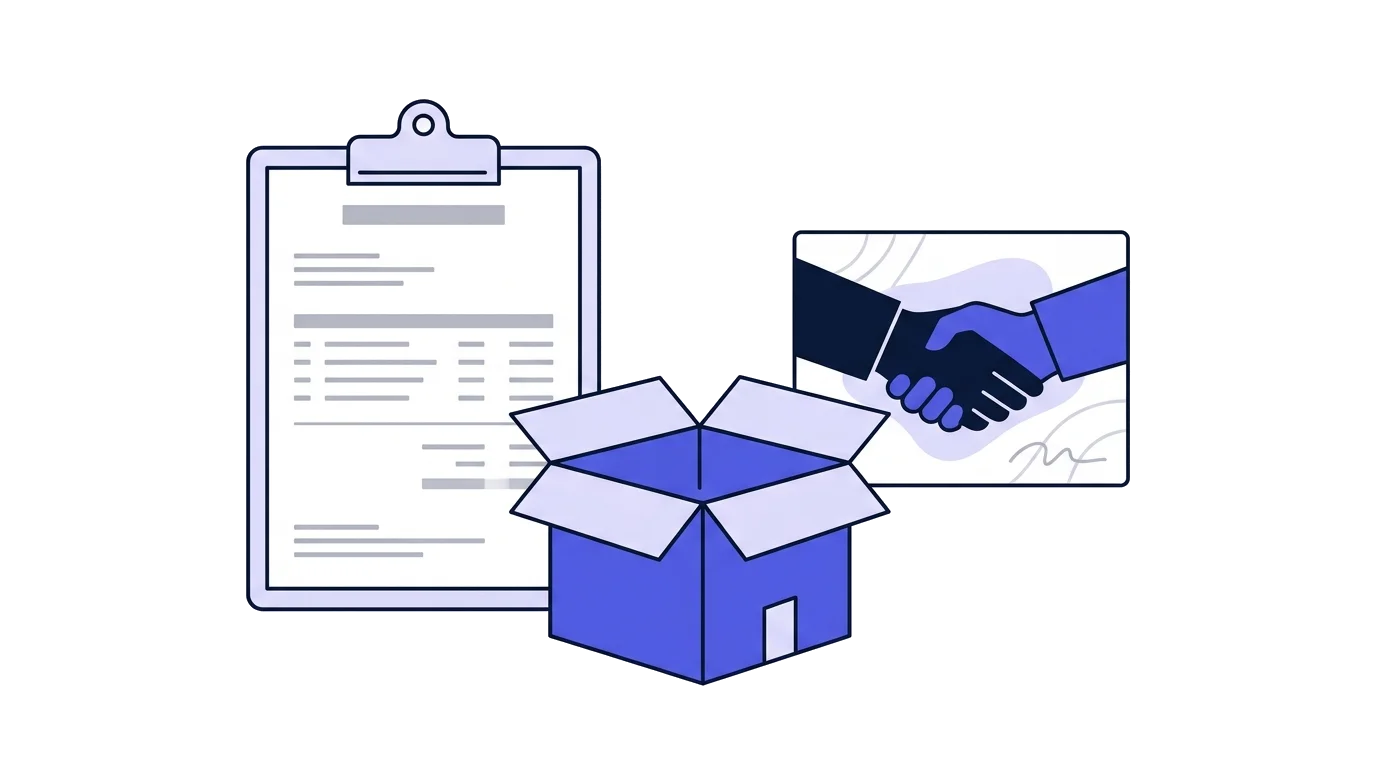
Nobody teaches you to issue an order document, and then a large customer refuses to pay without one. It is not a fiscal document, it has no standing under the VAT law, and it moves not a single shekel in your books. What it does is put in writing what was agreed, at the moment it was agreed.
What it solves
A quote is written in the language of an offer. After the customer approves, the only document in existence still says "proposed", and if delivery arrives two months later, neither side holds anything that says "ordered". The order closes that gap.
It matters most in three situations: when time passes between approval and delivery, when the work ships in parts and the running total gets lost, and when the customer is an organisation that works against order numbers.
- The items and quantities, as approved
- Unit price and total, and whether VAT is included
- A delivery date or schedule
- A reference to the quote number it came from
- The customer's purchase order number, where there is one
- The delivery address, when goods are involved
Their purchase order is not your order
This is where it gets confusing. Large companies, municipalities and public bodies run their budgets through purchase orders. The buyer issues a document with a number, and their system will not release payment against an invoice missing it. That document is theirs, created on their side, and it arrives to you.
What you have to do is keep the number and print it on everything going back to them, on your order and on the invoice. An invoice with no order number bounces at a customer like that, and the wait starts over.
Why it stays out of the books
An order creates no tax liability and grants nobody a deduction. It is not counted in turnover, not reported in the periodic return, and never enters the open format file. That is precisely why it can be corrected, cancelled or reissued with no credit note and no special procedure.
Its numbering runs in its own sequence, as with every document type. The full rules are in the numbering guide.
The full chain, from quote to receipt
- QuoteProposes terms, carries an expiry, and can be declined with nothing lost
- OrderLocks in what was approved. No expiry, because there is nothing left to expire
- Delivery noteTravels with the goods, no prices. Only relevant when goods are sold
- Tax invoiceWhere the fiscal side starts: VAT, reporting, and an allocation number above the threshold
- ReceiptRecords the money that actually arrived, and by what method
A business paid at the moment of sale skips the last two steps and issues a single tax invoice receipt.
An order built from the quote, lines included
The order is created from the quote in one click and the lines travel with it. From there it converts into an invoice the same way, so no line is typed twice anywhere along the chain. You can see a sample order and check exactly what gets printed on it.
Common questions
What is an order document?
A document that locks in what was agreed once the customer approves: items, quantities, price and delivery date. It has no VAT standing and never reaches the books.
How does an order differ from a quote?
A quote proposes and can be declined. An order records that the proposal was accepted, so it is written in settled terms and carries no expiry date.
Does an order need an allocation number?
No. Allocation numbers apply to tax invoices above the threshold, because they exist to verify a document that enables an input-VAT deduction. An order is not one.
What is the purchase order the customer sends?
Their document, not yours. Large organisations issue a purchase order with a number and refuse to pay an invoice that does not carry it. Record that number on your own order and on the invoice.
Can I skip the order?
On one-off work with a small customer, yes. An order earns its keep when there is a gap between approval and delivery, when goods ship in several batches, or when the customer needs an order number to pay.
Does an order replace the quote?
No, it continues it. Have the order reference the quote number it came from, so the whole chain stays traceable from quote through to invoice.