
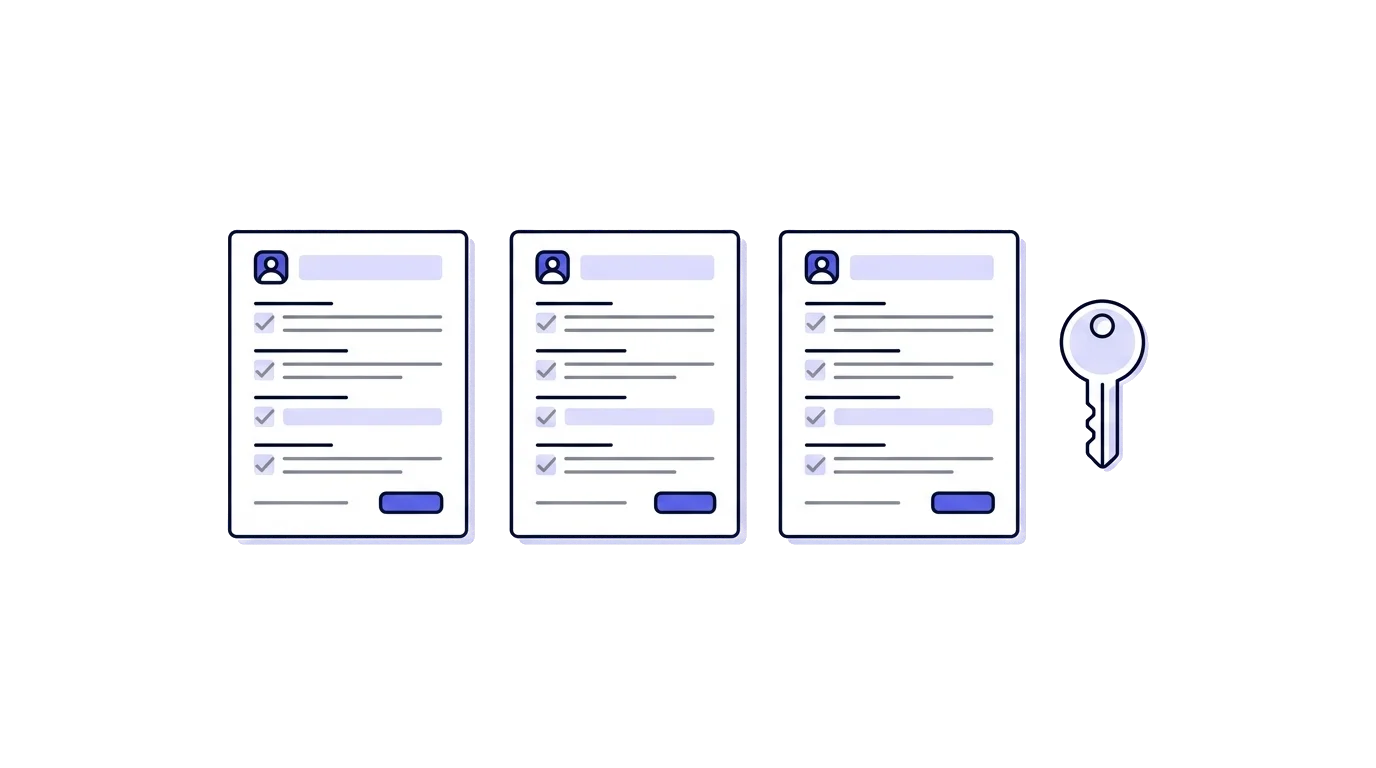
Opening as an osek murshe means three separate registrations with three bodies, and only one of them decides when you can start working. Anyone who has read opening an osek patur will recognize the shape, with one real difference: VAT registration needs a dedicated form, form 821, along with evidence that the activity is real.
- VATForm 821, ending in a dealer number and an osek murshe certificate
- Income taxOpening the file and setting advances as a percentage of turnover
- National insuranceReporting the start of self-employment and setting advances on estimated income
First, confirm this is the right status
There are two ways to arrive here. The first is a choice, when expected turnover passes the osek patur ceiling and there is no point opening as exempt only to switch two months later. The osek patur threshold calculator checks expected turnover against the ceiling.
The second is an obligation. The VAT law bars a list of occupations from registering as exempt, among them lawyers, accountants and tax advisers, doctors and dentists, architects and engineers, technicians, insurance agents, real estate brokers and driving school owners. Anyone on that list registers as murshe from the first shekel, however small the turnover.
There is also a third consideration unrelated to the ceiling. A business selling to other businesses gains from murshe status: the customer deducts the VAT, so the effective price to them is unchanged, and you deduct input tax on your own costs. The full comparison walks through every difference.
Step 1: VAT registration
The application is form 821. You can fill it in and send it online from the Tax Authority service page, or submit it at the regional VAT office covering the business address or through a representative. This is the step that takes most of the time, so it is worth arriving with the material ready.
What is usually asked for: an ID card, evidence of a bank account in the business or your own name, a document establishing the business premises such as a lease or a municipal tax bill, and evidence that the activity is real. That last part is what people most often arrive without: a signed client agreement, an accepted quote, or supplier invoices for equipment already bought.
At the end you receive a dealer number and an osek murshe certificate. The certificate is displayed at the business premises, and this is checked in practice.
Anyone wanting to verify a supplier's or customer's dealer details can do so with the dealer number lookup, and the same mechanism is what your customers will use to check you.
Step 2: Income tax registration
The income tax file is opened with the assessing officer for the area. At the end of it advances are set, a percentage of turnover paid monthly or every two months against the annual bill.
In the first year there is no previous year to derive the rate from, so it is set on an estimate or by sector. If the estimate is too high, you can apply to reduce it on form 2216א rather than paying advances that only come back at the reconciliation.
This is also the point to sort out a withholding tax certificate, because a business client will ask for one before the first payment and a new business does not get it automatically.
Step 3: National insurance registration
You report the start of self-employment within the period the law allows from the day the activity actually began. Bituach Leumi sets monthly advances on estimated income and reconciles against the assessment at the end of the tax year.
This is the step most tempting to delay and the most expensive to delay. Someone not registered is not covered for the relevant branches during the unregistered period, which surfaces on precisely the day the cover is needed. The rates and definitions are in the national insurance guide, and the amount can be checked in the national insurance calculator.
What to set up before the first invoice
An osek murshe issues a tax invoice, and therefore walks straight into every digital requirement that an osek patur meets only partly.
- A system that issues tax invoices with locked sequential numbering, not documents edited after the fact
- A digital signature on every document that goes out, as the law requires
- A connection to the Israel Invoices system for allocation numbers on invoices that need one
- The ability to export an Open Format file for your accountant and for an audit
- Knowing which reporting frequency was set for the file, monthly or every two months
Issuing from Word or Excel meets none of the first three, and that usually surfaces with the first business client who refuses an invoice without an allocation number.
Four first-month mistakes
Issuing an invoice before registration completes. A document without a valid dealer number does not entitle the customer to a deduction, and the fix is cancelling with a credit note and reissuing.
Describing the occupation in one word. "Consulting" or "services" with no context produces a wrong classification, and sometimes a high withholding rate that follows the business for a full year.
Treating collected VAT as income. That money passes through you to the Tax Authority, and a business counting it as cash flow discovers the gap at the first report. Worth separating it in practice, not only mentally.
Skipping an empty period. Two months without income still require a zero report, and a missed filing is recorded as late.
Tax invoices ready from day one as osek murshe
Signing up starts with choosing a business type, and once osek murshe is selected the system issues tax invoices with locked numbering, a digital signature and an allocation number request to the Tax Authority, without configuring each of those separately.
This is general information, not tax advice. For a specific situation, talk to an accountant or tax adviser.
Common questions
Who has to register as an osek murshe?
Anyone whose expected annual turnover passes the osek patur ceiling, and anyone in an occupation that the VAT law does not allow to be registered as exempt, including lawyers, accountants, doctors, architects, engineers, insurance agents and real estate brokers.
Which form opens the VAT file?
Form 821, the application to open an osek murshe file. It can be submitted online on the Tax Authority site, at the regional VAT office, or through a representative.
How long does it take?
The VAT registration sets the pace, and it is usually a matter of days when the documents are ready. Income tax and national insurance registration are quicker.
Can you invoice before the file is open?
No. A tax invoice requires a valid dealer number, and a document issued before registration does not entitle the customer to deduct input VAT.
What does it cost to open?
There is no registration fee. The costs are an accountant or tax adviser, a system for issuing documents, and national insurance contributions that start running immediately.
When is the first VAT report due?
By the reporting frequency set for the file, monthly or every two months depending on turnover, by the 15th of the month following the period. A period with no income still needs a report.
Does the certificate have to be displayed?
Yes. The osek murshe certificate issued at the end of registration is displayed at the business premises in a visible place, and this is checked in field inspections.