
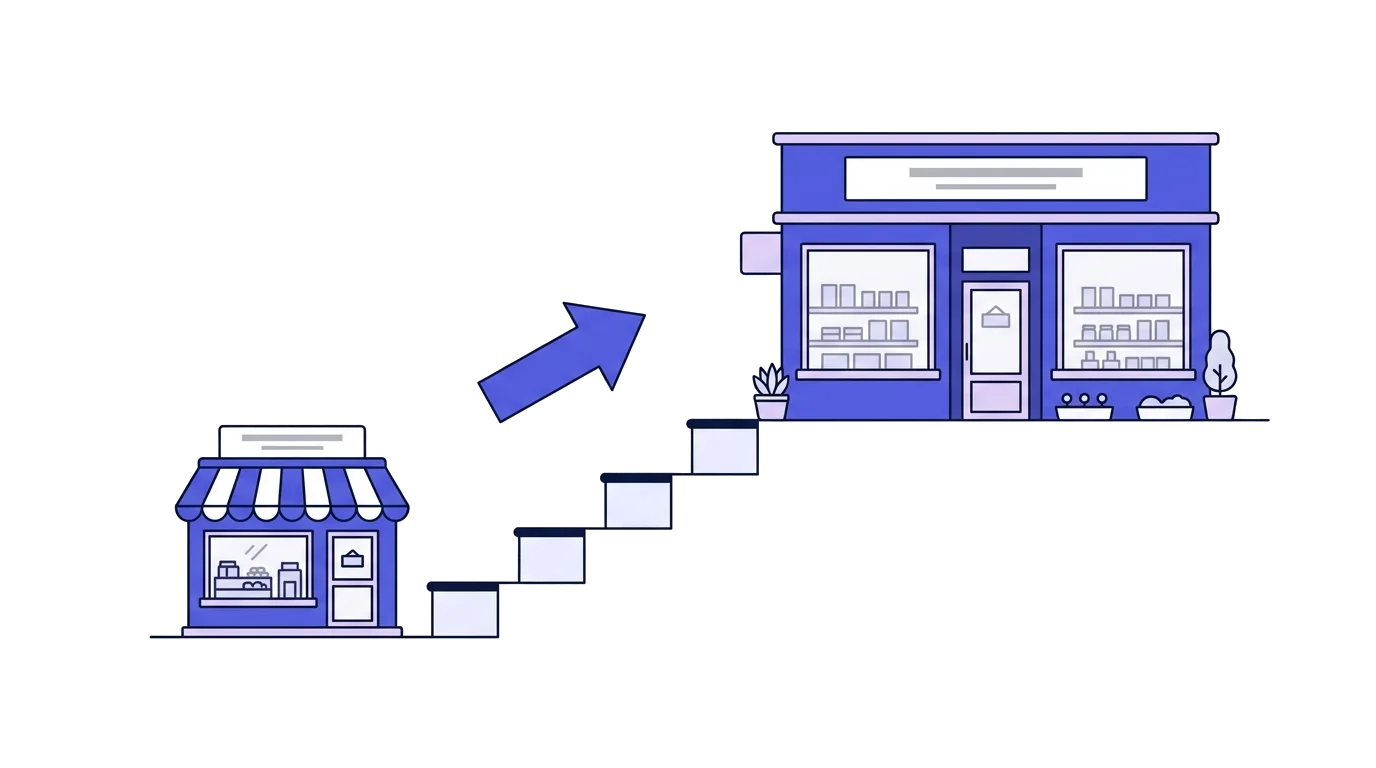
The move from osek patur (exempt dealer) to osek murshe (licensed dealer) is one of the more confusing moments for a self-employed person, not because it's technically complicated but because it hits pricing, document issuance, and reporting all at once.
When the switch is mandatory
The moment annual turnover crosses the threshold set by law for osek patur status that year, switching to osek murshe is mandatory, not a choice. The threshold is updated every year, so it's worth checking the current figure with the Tax Authority or your accountant rather than relying on a number you picked up once. The osek patur threshold calculator shows how much room is left.
Some professions require osek murshe status from the start, regardless of turnover. The full differences between the two statuses are in the comparison guide.
What counts toward turnover
The ceiling is measured on turnover, meaning total business income before expenses are deducted. This trips people up: a business with ILS 130,000 of income and ILS 50,000 of expenses is measured at 130,000, not at the profit.
A business opened mid-year gets the full annual ceiling, so the first year leaves more room than it might seem.
What happens if you keep operating as osek patur after crossing the threshold
Continuing to issue documents as an osek patur after crossing the threshold exposes you to retroactive VAT charges on transactions you've already completed, and sometimes to fines as well. Once it's clear your turnover is going to cross the threshold, it's better to approach the Tax Authority proactively rather than wait for a notice.
The exposure here isn't theoretical. Retroactive VAT is calculated on transactions already collected in full from the customer, so it comes out of the business's pocket rather than the customer's. A business that crossed the threshold in March and noticed in December pays nine months of VAT out of profit that has already been spent.
- Every new document is issued as a tax invoice instead of a transaction invoice
- You charge customers VAT and report it in a periodic return
- Input VAT on expenses becomes deductible
- You decide whether the customer price goes up or the VAT is absorbed
- The earlier numbering sequence stays as it is and does not reset
What actually changes
From the moment your status changes, every new document is issued as a tax invoice rather than a transaction invoice, and you need to charge customers VAT and report it in a periodic VAT report. Input VAT on expenses becomes deductible, sometimes even on expenses incurred close to the switch date.
The pricing decision
This is the biggest commercial decision, and it differs by customer type. For a business customer who deducts VAT, raising the price by the VAT rate changes nothing for them: their effective cost stays the same. For a private customer, that same increase is a genuine price rise.
A business with a mixed customer base usually raises prices for business customers and absorbs part of the VAT for private ones. Do that calculation in advance: absorbing the VAT in full erodes roughly 15% of the net income on those sales.
Allocation numbers enter the picture
From the switch onward, tax invoices above the threshold require an allocation number from the Tax Authority. That requirement didn't exist at all as an osek patur, and it's worth checking against your invoicing system before the first invoice goes out.
What happens to invoices already sent
Sales made before the switch date stay as they are. A transaction invoice issued as an osek patur does not retroactively become a tax invoice, and no corrective document should be issued merely because the status changed.
What does need attention is work that began before the switch and finished after it. There the chargeable date governs, not the order date, so it is worth checking with your accountant which part of the consideration carries VAT.
What happens to existing numbering
The sequential numbering of the transaction invoices issued as an osek patur doesn't reset and doesn't get deleted; it stays valid history. The new tax invoices start their own separate numbering sequence, as required by law. Both sequences continue to exist side by side as a complete historical record.
Those older documents also stay subject to the seven-year retention duty. The switch clears nothing from the past.
Input VAT on the period before the switch
An osek patur deducts no input VAT, so expenses incurred beforehand produced no refund. Two points are worth raising with your accountant at the switch.
The first is stock and equipment bought before the switch that the business still uses. In some cases part of the input VAT on them can be deducted around the time of the switch, depending on the type of asset and the purchase documentation.
The second is invoices received close to the switch date. A supplier invoice dated before the switch is not deductible even if it was paid afterwards, so timing a large purchase around the switch date is worth thinking about in advance.
What to do in the first week
- Update the business type in your invoicing system, before the next invoice goes out.
- Confirm with the Tax Authority which reporting frequency you were assigned, monthly or bi-monthly.
- Update open quotes and contracts so they state explicitly whether the price includes VAT.
- Start recording input VAT on expenses, which was irrelevant until now.
One settings change, history kept
Changing the business type in settings is a one-time action, and from that moment Slate shows and issues only the document types appropriate for osek murshe, including automatic VAT calculation and requesting an allocation number when relevant, while your previous history as an osek patur stays fully accessible and preserved.
This is general information, not tax advice. For a specific situation, talk to an accountant or tax adviser.
Common questions
When is switching from osek patur to osek murshe mandatory?
The moment annual turnover crosses the ceiling set in law for that year, not at the start of the following year. The switch is mandatory, and the ceiling is measured on turnover rather than profit.
What happens if I kept trading as an osek patur after crossing?
The exposure is retroactive VAT on sales already made, and sometimes fines. That VAT comes out of the business's own pocket, because the customer already paid a price with no VAT on it.
Do I have to raise prices after the switch?
For a business customer who deducts VAT, adding it changes nothing in their effective cost. For a private customer it is a real price rise, and absorbing the VAT instead costs roughly 15% of net income on those sales.
Does invoice numbering reset at the switch?
No. Transaction invoices issued as an osek patur keep their sequence, and tax invoices start a separate one. Both sequences live side by side as historical record.
Can I go back to being an osek patur later?
Not automatically and not immediately. Turnover dropping below the ceiling does not restore the status by itself; you have to apply to the Tax Authority, and approval is not guaranteed.
How long does the switch take?
Updating the status with the Tax Authority is quick. What takes time is everything around it: repricing, updating open quotes, configuring the system and learning your reporting frequency. Start before crossing rather than after.