
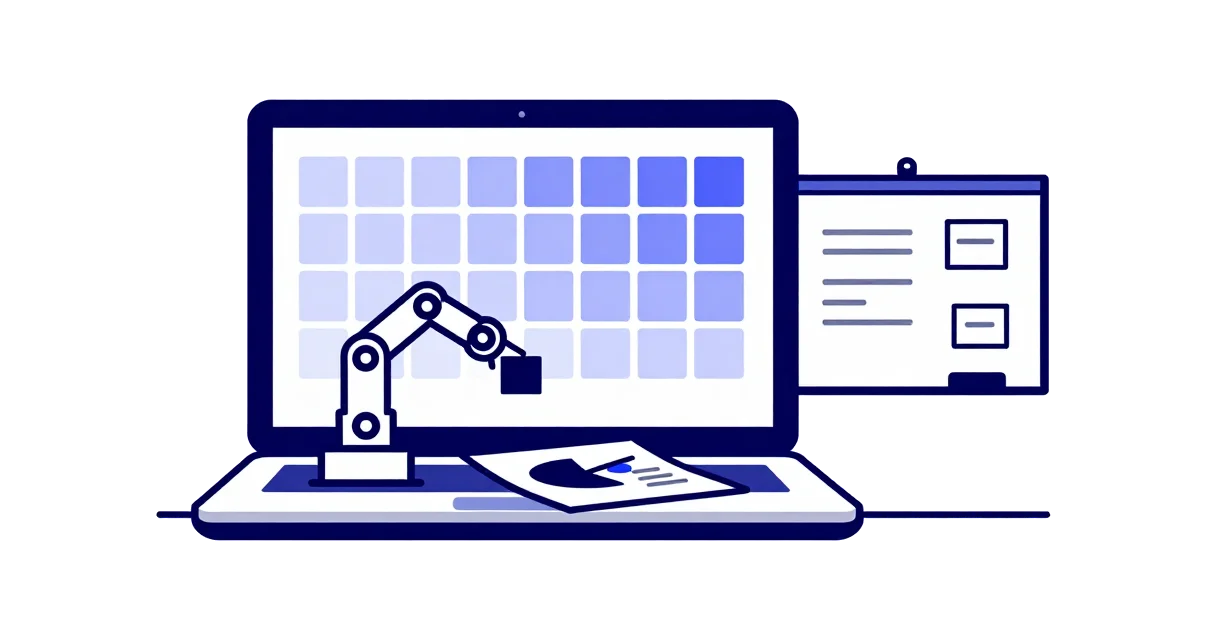
On 10 November 2026 Anthropic added two new kinds of file to its Claude assistant: a spreadsheet, called Claude Sheets, and a shared whiteboard. You ask in plain words, for example "build me a monthly expense tracker by supplier", and Claude builds the sheet with its formulas and tabs. From there you edit it yourself or ask for changes. Claude writes straight into the cells and lists every change it made.
Both tools are in beta on every paid plan: Pro, Max, Ultra, Team and Enterprise. The free plan does not get them. On Team they are switched on from the start, and on Enterprise an admin has to turn them on in the organisation settings.
Pricing for a freelancer
The lowest plan that includes Sheets is Pro, at $20 a month billed monthly, or $17 a month on an annual plan paid as $200 up front. Max is $100 a month. Team, meant for groups of 2 to 150 people, costs $25 per standard seat a month billed monthly, or $20 billed annually. The pricing page shows all of these before tax.
There is no separate allowance for spreadsheets. Work on a sheet counts against the plan's normal usage limit, the same as a chat.
Where a sheet stops
One sheet holds up to 100,000 cells. It has 144 functions, formulas that work across tabs, dropdown menus, and bar, line and pie charts. You can import a CSV file, an Excel file or a Google Sheet, or paste a table from either. When you are done, you download it as an .xlsx or CSV file, so an accountant can open it in Excel.
Several things are still missing. There are no pivot tables, no find and replace, no sorting by more than one column and no PDF export. Macros, VBA, Power Query and print layouts are not supported. A sheet also cannot pull live data from apps connected to Claude, so a report built today will not refresh itself tomorrow. Editing happens on the web and in the desktop app. On a phone you can only view.
A new sheet is private until you share it. Once shared, a partner or a bookkeeper can work in it at the same time as you and Claude.
A shared board for plans
The whiteboard is a canvas where Claude turns a plan into a visual layout, with timelines and deadlines. It comes with the same plans and also works in the mobile app. You can invite people from outside your business by email, save the board as a PNG image, or ask Claude to turn it into a document or a slide deck. It has the same limit as the sheet: it does not use information from connected apps. Voice dictation on the board works in Hebrew, according to the help page.
The same day, Anthropic began letting other apps open inside the chat, starting with tools such as Canva, monday.com and Dropbox, so Claude can work in their content without switching tabs. That reaches every plan, the free one included, on the web and in the desktop app, wherever the app supports it. A feature that joins a video call and takes notes was announced as coming soon, with no date.
For a business in Israel
Nothing on the official pages limits Sheets or the whiteboard by country, so a subscriber in Israel gets the same tools. A sheet like this suits a quote, a budget, a collections tracker or a profit and loss statement for the bank. It does not replace the books. The Israel Tax Authority has said that books kept in Excel and receipts typed in Word don't count as records, because they can be changed after the fact. An invoice built in a spreadsheet, by an assistant or by hand, is still a file anyone can edit, which is why an invoice made in Excel falls short of the rules there. Lists, sums and planning can go to the assistant. Invoices and receipts come from registered software.